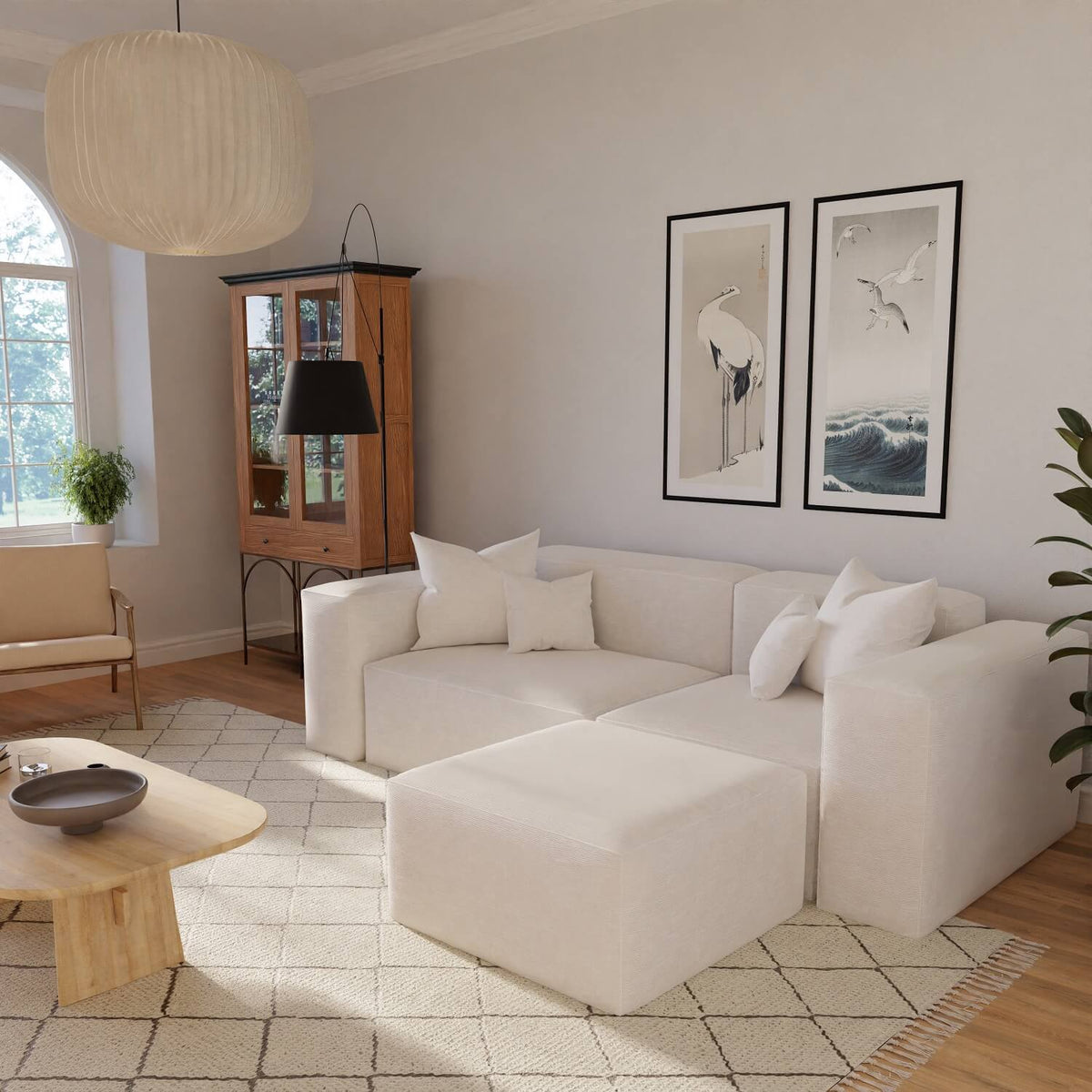
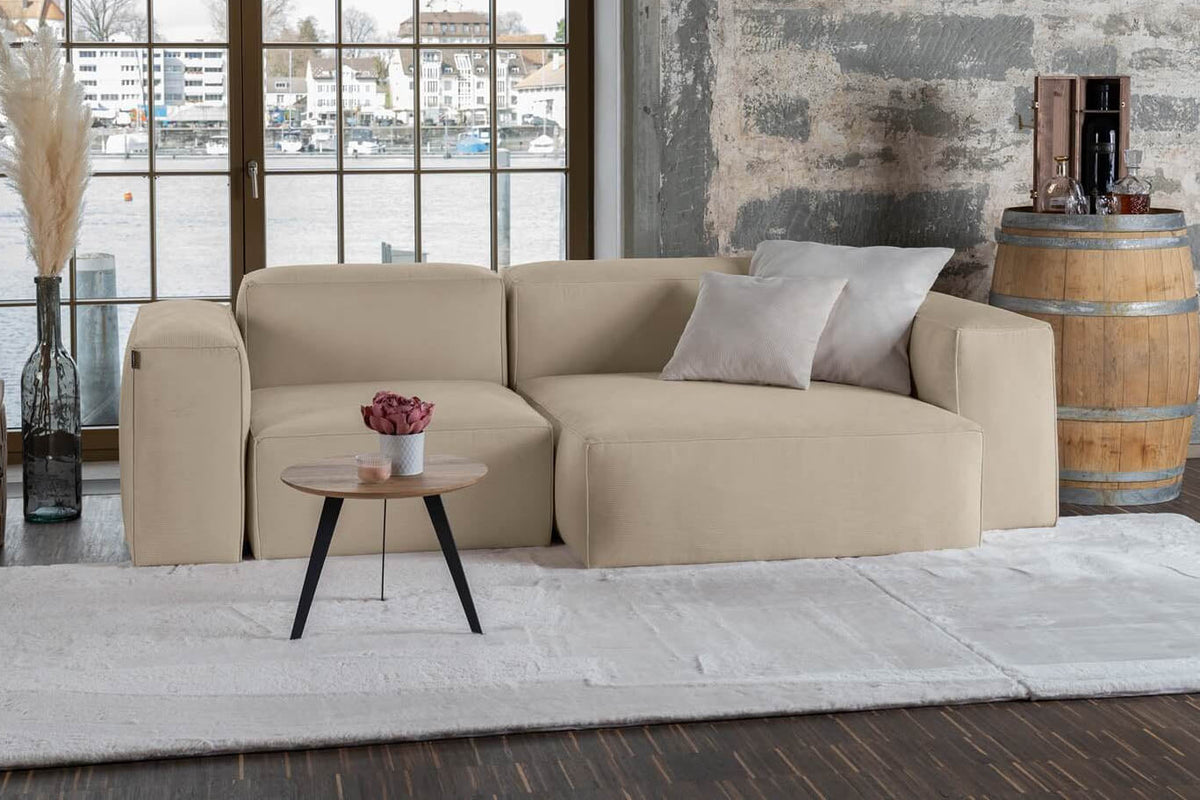
Two sofas can look the same in the shop and still have a completely different lifespan. The difference is inside: in the frame, the springs, the foam and the fabric. In this article you'll learn what to look for, which questions to ask in the shop and where to buy a good sofa. We use our modular sofa Nina as an example, because we can show exactly what's inside.
1. The frame: the skeleton of your sofa
The frame decides whether your sofa starts creaking, wobbling or sagging after a few years. Look for:
- Material: hardwood (such as beech) and plywood are stronger than thin chipboard or softwood alone.
- Joints: glued and screwed is better than only stapled.
- Test: lift one corner of the sofa a few centimetres. If the frame bends or creaks, it's too light.
Example Nina: the frame is made of chipboard and plywood with beech and pine slats.
2. The springs: support and resilience
Under the foam there are springs. They make sure you don't sit "on the bottom" and that the seat keeps its shape.
- Nosag springs (wavy steel springs) give progressive support: the more weight, the firmer.
- Pocket springs work spring by spring and follow your body.
- Elastic webbing is lighter and cheaper; fine if it's good quality and tightly tensioned.
Example Nina: nosag springs for progressive comfort, with a protective fabric between springs and foam so the foam doesn't wear on the springs.
3. The foam: where the comfort is
Cheap sofas often have a single layer of soft foam. It feels lovely in the shop, but sags quickly. A good sofa has several layers: a firm core for support and a softer top layer for comfort.
Example Nina: 4 cm firm foam, 6 cm soft foam, upholstery foam and a layer of wadding. That gives a seat most people experience as medium-firm: you don't sink in, but you still sit comfortably.
4. The fabric: durability and care
- Abrasion resistance (Martindale): the higher, the longer the fabric stays nice.
- Pilling: a score of 4 or 5 means little pilling.
- Removable covers: if you can wash or replace the cover, your sofa lasts much longer.
Read more about fabric values in our article on colour fastness, abrasion resistance and pilling.
5. Warranty and trial period
A manufacturer who trusts its sofa also guarantees it. At Livom you get a 5-year warranty and a 100-day trial: if the sofa doesn't work out at home, you send it back.
Checklist for the shop
- Ask what the frame is made of.
- Ask which springs and how many foam layers are inside.
- Lift a corner and listen for creaking.
- Sit for at least five minutes and stand up a few times.
- Ask about the abrasion resistance and pilling of the fabric.
- Ask whether the covers are removable and washable, and whether you can reorder them.
- Ask about the warranty and trial period.
Where to buy a good sofa?
You'll find quality both in shops and online. What counts: that you know what's inside and that you can try it. If you buy online, choose a shop that openly shows how the sofa is built, offers a trial period and has a showroom where you can try it. Also read our tips for buying a sofa online.
Our pick: the Nina

The Nina is a modular sofa with nosag springs, layered foam and a medium-firm seat. Seat height 39.5 cm, seat depth approx. 70 cm. Choose a 2-seater (200 x 105 cm), a 4-seater corner sofa with sleep function (305 x 165 cm) or a U-shape (360 x 165 cm). View all Nina sofas
Feel what goes into a good sofa, in our showroom in Amsterdam. Book a showroom visit
Written by Jan Wasowicz, interior designer at Livom.